Stuck in the Sand? Expert Beach Recovery in Ocean Shores, WA
If your tires are buried, the tide is moving, or your vehicle is sitting low in the sand, the next few minutes matter. Here is what to do, what not to do, and when to call for help.
Request Help NowIf you’re reading this on your phone with sand under your tires and your heart in your throat, take a breath. You’re not the first driver this has happened to on the Washington coast, and you won’t be the last. The Ocean Shores and Copalis beaches see hundreds of stuck vehicles every year, especially during clam-digging season. What matters right now is what you do in the next few minutes.
Beck’s Towing Road & Beach Recovery is based right here in Ocean Shores. We run 24/7, we know every beach approach from Damon Point to Copalis, and we’ve built our rigs specifically for saltwater sand recovery. If you’re already stuck and the tide is coming in, call (360) 470-8388 now and keep reading while you wait.
Already stuck near the surf line? Stop spinning your tires, get everyone to higher ground, and call Beck’s Towing at (360) 470-8388.
Why Ocean Shores Sand Traps Vehicles So Easily
Ocean Shores looks deceptively firm. Cars, trucks, and RVs cruise the hard-packed strip near the surf all summer long, and it feels no different than a paved road until it isn’t. Two very different types of sand are working against you out here, and both can bury a vehicle in under a minute.
Soft Dry Sand
The pale, powdery sand above the high-tide line has almost no cohesion. When a tire rolls onto it, the sand flows out from under the tread instead of supporting the weight. Vehicles that pull off the drivable strip to park, turn around, or let kids out often sink to the frame within a few feet.
Wet Clam-Digging Sand
At low tide, the strip closest to the water can look perfectly firm until you stop moving. Once your tires stop rolling, water wicks up through the sand and turns the surface into something closer to wet cement mixed with quicksand.
Why Spinning Your Tires Is the Worst Thing You Can Do
Almost every stuck driver’s first instinct is to give it more gas. Please don’t. Spinning tires dig you in fast. Every rotation throws sand backward and drops the vehicle another inch or two. Within seconds, the frame or differential can touch down on the sand, and at that point you’re no longer stuck; you’re beached.
Once the chassis is resting on sand, the tires can’t create traction because they are no longer carrying the vehicle’s weight.
Aggressive throttle in sand also cooks transmissions and clutches, especially in AWD crossovers and RVs that were not designed for sustained wheel slip. It is not unusual to see a repair bill higher than the recovery itself, all from 30 seconds of panic pedal.
What to Do in the First 5 Minutes If You’re Stuck
- Stop pressing the accelerator. Take your foot off the gas the moment you feel the vehicle sinking.
- Get everyone out of the vehicle. Move people and pets to firm, dry sand well above the tide line.
- Check the tide. If the surf is closer than it was 10 minutes ago, the tide is coming in.
- Note your exact location. Know the nearest beach approach, landmark, or mile marker.
- Call Beck’s at (360) 470-8388. Tell us your vehicle type, how stuck you are, and the tide status.
Clam-Tide Danger: What to Do If the Water Is Rising
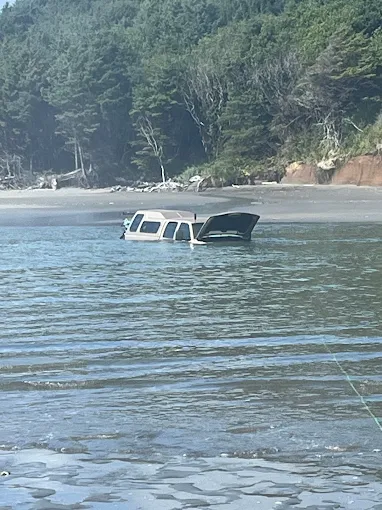
Razor clam openings bring thousands of diggers to Ocean Shores and Copalis, and the tide window is narrow by design. You dig on the outgoing tide, then you need to be off the beach well before the incoming tide reaches your vehicle. Every clam season we recover cars that lost that race.
- Get people and pets out of the vehicle immediately.
- Move to firm, dry sand above the previous high-tide line.
- Call Beck’s Towing at (360) 470-8388 and say “tide coming in.”
- Do not go back into the water to rock the vehicle free.
- Take a photo from a safe distance once help is on the way.
DIY or Call for Beach Recovery?
| Situation | DIY May Work | Call Beck’s Now |
|---|---|---|
| Where are you? | Firm, damp sand well above the surf line. | Wet clam-digging sand, near the surf, or in a soft dune. |
| Tide status | Tide is going out, with hours until next high tide. | Tide is coming in or high tide is within 2 hours. |
| How stuck? | Tires spun once or twice; frame is not touching sand. | Vehicle is high-centered on the frame or axle-deep. |
| Vehicle type | Small 4WD or AWD SUV with traction boards. | RV, motorhome, minivan, sedan, or any 2WD vehicle. |
| Recovery gear | Shovel, traction boards, and a spotter. | No gear, no spotter, or the tide is closing in. |
Why Standard Tow Trucks Fail in Soft Sand
A traditional flatbed or wrecker is built for pavement. Drive one onto soft beach sand, and the tow truck itself can become the second stuck vehicle. Even when a road-service truck can safely reach the edge of a stuck vehicle, the standard hook-and-chain approach can rip bumpers off, twist frames, and shear suspension components because the vehicle is fighting suction the entire way out.
That is why beach recovery requires specialized equipment, local beach knowledge, and the right recovery angles. You can learn more about Beck’s towing, roadside, lockout, and recovery capabilities on our services section.
How Beck’s Actually Gets You Out
- Purpose-built 4x4 recovery rigs with aggressive tire setups and low ground pressure for beach terrain.
- Heavy-duty winches with long line pulls, so we can stage on firm sand and pull toward stability.
- Sand anchors, snatch blocks, and traction mats for saturated tide-line recoveries.
- Local knowledge of every drivable beach approach from Ocean Shores to Copalis and Pacific Beach.
- Saltwater exposure experience, so we know what to check before you drive home.
RVs, Motorhomes, and Heavy Vehicles on the Beach
Big rigs deserve a special warning. Motorhomes, Class C campers, and dually pickups towing trailers are the vehicles most likely to sink irrecoverably in Ocean Shores sand because the weight per tire is enormous and the wheelbase is long. If you’re in an RV, keep it on paved lots and let smaller vehicles do the beach cruising.
When RVs do get stuck, they require flatbed or heavy-duty recovery. Beck’s is equipped for these recoveries, but the process is longer and more expensive than a passenger car recovery. Prevention wins here every time.
How to Avoid Getting Stuck Next Time
| Before You Drive on the Beach | Why It Matters |
|---|---|
| Air down tires to 15–20 PSI. | Widens the tire footprint so it floats over soft sand instead of digging in. |
| Check the Ocean Shores tide chart. | Never drive on the beach within 2 hours of high tide. |
| Stay on firm, damp sand. | The strip between dry dune sand and the surf is usually the most stable surface. |
| Keep momentum and avoid sharp turns. | Slow, steady movement prevents digging in. Sharp turns bury front tires. |
| Carry traction boards, a shovel, and tow strap. | Even AWD and 4WD vehicles need help once they are high-centered. |
| Tell someone your plan. | Cell service can be spotty from Copalis to Ocean City, so a shore contact matters. |
Common Questions About Beach Vehicle Recovery
What should I do if my vehicle is stuck in wet sand and the tide is coming in?
Does standard roadside assistance or AAA cover beach sand winch-outs in Washington?
When is the risk of getting stuck highest during clam digging season?
Do I need a 4WD to drive on the beach in Ocean Shores?
How fast can Beck’s Towing respond to a beach recovery call?
Stuck Right Now on Ocean Shores or Copalis Beach?
Don’t spin your tires. Don’t wait for the tide. Beck’s Towing Road & Beach Recovery is on call 24/7 with the 4x4 recovery rigs and winches built for this coast.
Contact Beck’s NowAbout Beck’s Towing Road & Beach Recovery: Locally owned and operated in Ocean Shores, WA, Beck’s provides 24/7 towing, roadside assistance, and specialized beach and off-road recovery across Grays Harbor County, including Ocean Shores, Copalis Beach, Pacific Beach, Hoquiam, and Aberdeen. When the tide is closing in and every minute counts, call (360) 470-8388 or request help online.